Summary
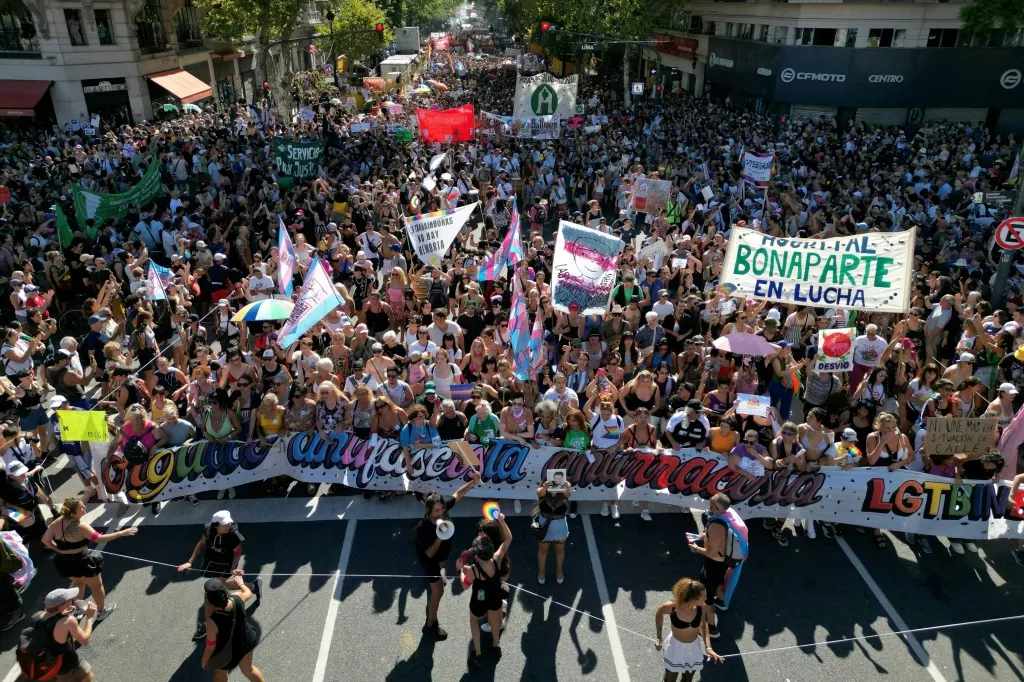
There were massive united protests against Argentina’s far-right President, Javier Milei, on Saturday 1 February 2025. These were initiated by the LGBT+ movement in response to homophobic declarations made by the President in Davos. However, the estimated 2 million participants in demonstrations across the country included individuals and movements with many other demands against Milei.
Group(s) involved
Asamblea Antifascista LGBTIQ+: Broad ad-hoc assembly of LGBT+ activists coming from the left, Peronism, trade unions, human rights movements, struggles for the rights of disabled people…
Federación Argentina LGBT+ (FALGBT): Network of more than 150 organisations across Argentina that promote and defend the rights of LGBT+ people. https://www.instagram.com/falgbt/
Marcha del Orgullo Argentina: Organising committee for the annual Pride march in Buenos Aires. https://marchadelorgullo.org.ar/ https://www.instagram.com/marchadelorgulloar/
Countless other movements joined the mobilisation.
The events
These protests were in response to the speech by Argentina’s far-right president, Javier Milei, at the World Economic Forum in Davos, on 23 January 2025. As Ornella Infante, General Secretary of the FALGBT, put it: “In an event where he was supposed to be speaking about the economy, he started violating the rights of LGBTIQ+ people and women in general” (Interview with OI, 2026). Thus, instead of promoting his extreme free market “Anarcho-capitalist” vision, he made a frontal attack on “Wokism”:
“Woke ideology… is the great epidemic of our time that must be cured; it is the cancer that must be eradicated. This ideology has colonised the most important institutions in the world… Wokism was built, [as] a regime of groupthink, sustained by different institutions whose purpose is to penalise dissent. Feminism, diversity, inclusion, equality, immigration, abortion, environmentalism, gender ideology, among others, are heads of the same creature whose purpose is to justify the advancement of the State… It is our moral duty and our historical responsibility to dismantle the ideological edifice of sick wokism.” (Milei 2025)
Speaking of homosexuality, Milei affirmed: “In its most extreme versions, gender ideology is simply child abuse. They are paedophiles…” (Let us not forget that when he was speaking, it was already common knowledge that the convicted paedophile Epstein had for years used that very Davos Forum to cultivate contacts. FT.com 20/06/2023)
While the attack on LGBT+ rights was a key element of the speech, the assault was broader. Milei claimed that: “The West represents the peak of the human species, the fertile ground of its Greco-Roman heritage and its Judeo-Christian values planted the seeds of something unprecedented in history.” Thus a president from Latin America was celebrating the “Western superiority” that had almost eliminated the original population of that continent, and then committed another crime against humanity in the form of the transatlantic slave trade.
The speech provoked a very strong and widespread reaction, first of all among Argentina’s LGBT+ movements.
This happened almost instantly, and in a way that set the tone for the mobilisation on 1-F. LGBT+ activist Gabriela Mitidieri explains that on the day of Milei’s attack on “woke”, Thursday 23 January, a friend was presenting a book in Buenos Aires about the Israeli occupation of Palestine:
“There were many of us — leftists, LGBT people, and like-minded individuals — at the book launch, in a bookshop a few blocks from Lezama Park. Word got around that we should get together that evening. As many people were already at the bookshop, we went straight there… At first we thought it would just be us… but there were 80 other people in the park, which we hadn’t expected.” (Interview with GM, 2026)
That urgent meeting on 23 January called an assembly for Saturday 25 January. Thus just two days after Milei’s declarations, an estimated 5,000 people participated in an urgent assembly in Lezama Park, Buenos Aires.
They called for a demonstration in Buenos Aires for the following Saturday, 1 February. Given that trans rights were under specific attack by the Milei administration, they agreed that the demonstration should be headed by trans women. But from the beginning, the call was generalised. The assembly agreed that antiracism had to be key element of the protest.
Mitidieri wrote later of the importance of:
“a strategic awareness of the role of broad fronts in contexts of growing fascistization. Left-wing militants, Peronists, Kirchnerists, anarchists, self-convened participants with no prior political experience, human rights activists: we all understood that the risk of fragmentation was very real. The first assembly established that anti-fascism was the umbrella that united us. We chose to call ourselves anti-racist, as well as LGBTIQ+… In the light of what we achieved, we know it was an excellent strategy to come together despite our differences” (Mitidieri, 2026).
So in the call for the demonstration, all sorts of different organisations were invited to join the mobilisation, expressing their own specific demands and criticisms of Milei.
Ornella Infante explained: “We have been saying for some time that we must unite our struggles; they mustn’t be separated or fragmented. The far right is very good at dividing the popular movement, we must prevent this. That is why the call to action was made by all sectors” (Interview with OI, 2026).
The call to action was taken up way beyond Buenos Aires, and assemblies were organised by activists around Argentina, to organise protests in their different cities for 1 February.
The result went beyond all expectations. According to Esteban Paulón, an LGBT+ activist and Member of Argentina’s Federal Parliament:
“the march was impressive… it exceeded any forecast, not only because of the massiveness in the city of Buenos Aires, where it is estimated more than a million people, but also because of the massiveness in the 150 cities in which it was held throughout the country… it was a very, very big march in Rosario, in Córdoba, in Santa Fe, in Mar del Plata, in Bariloche, in the north, in Salta” (Rioseco 2025).
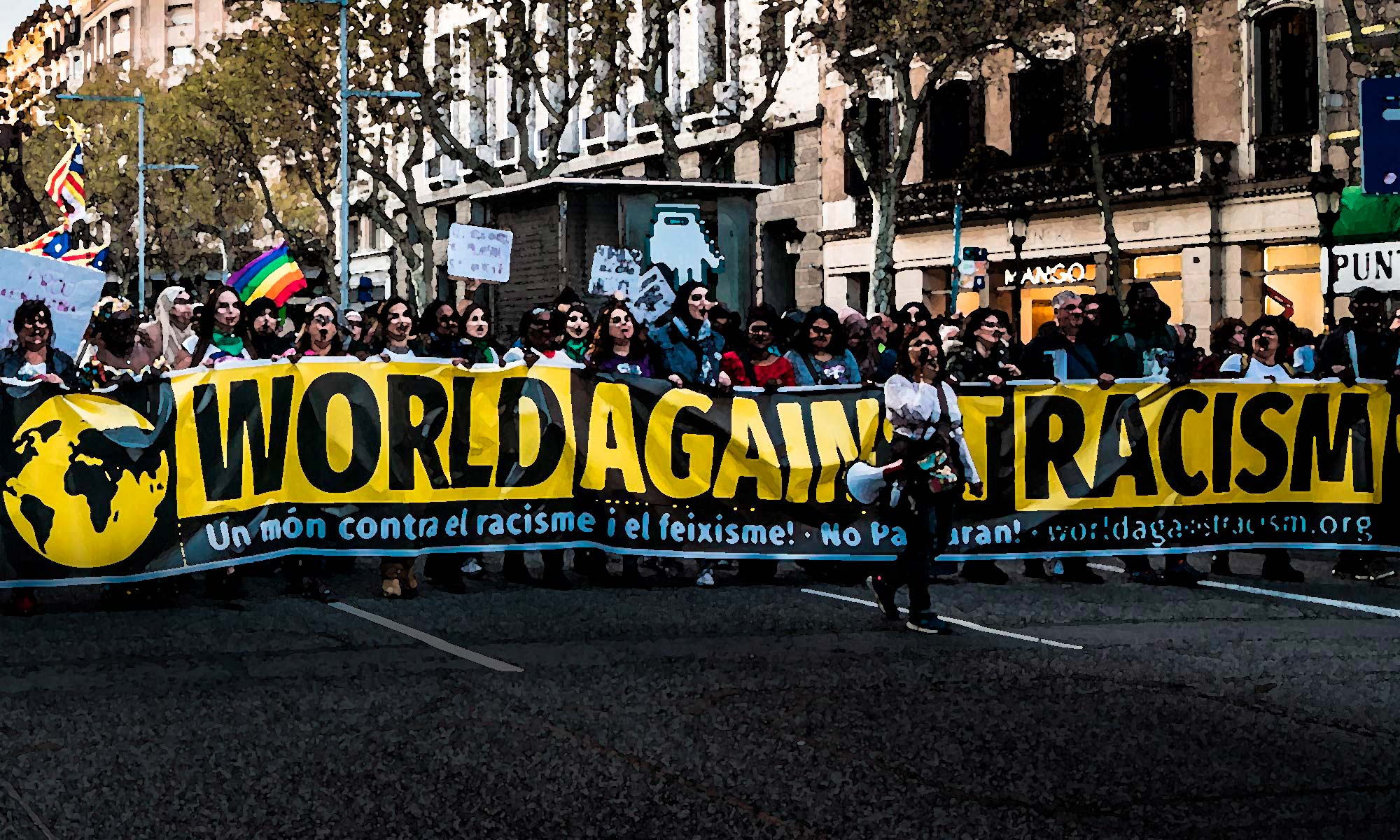
There were even solidarity protests internationally, including Santiago, Chile; Montevideo, Uruguay; Rio de Janeiro and São Paulo in Brazil; Mexico City; London; Amsterdam; Berlin; Geneva; Paris; New York; Lisbon; and Barcelona, Granada and Madrid in the Spanish state. (Rioseco 2025; Buenos Aires Times 2025).
The overall estimate was that 2 million people participated in the protests.
Repercussions and conclusions
The mobilisation was clearly a massive success. According to press reports, as people marched through cities across Argentina, Milei retweeted messages criticising and downplaying the demonstration. It was clearly such an “insignificant” action that the President saw the need to dedicate part of his verbose social media activity to insisting on its lack of importance.
Milei’s has made and is making multiple attacks on people’s standard of living, working conditions, freedom of speech, and more. But before the 1 February marches, the responses were often fragmented and sectorial.
The broad and unitary nature of the call was clearly central to its success.
Argentina has a very large and active radical left, including parties with tens of thousands of members. Several of them constitute an electoral alliance (FIT-U, Workers’ Left Front – Unity), but unity is often lacking even within the revolutionary left. Between this left and the very important Peronist movement, there is even more distrust, with a history of very serious clashes.
As Mitidieri commented: “the differences between Peronism and the left are very difficult to overcome”. In this case, however, the gravity of the situation meant there was “a desire for a broad front”. Thus “a fairly balanced coordination was achieved between self-organised left-wing groups and progressive Peronism, and that… was quite fundamental to consolidating the march.” (Interview with GM, 2026)
Infante commented: “the sexual diversity movement in Argentina has done politically transversal work”. All parties, except for the right and the far right, as well as most trade unions, have adopted pro LGBT+ policies: “so that gave us the possibility of making a very broad call.” (Interview with OI, 2026).
Another facet of the unity highlighted by Mitidieri was the fact of bringing together a wide range of individual activists, LGBT+ or not, together with bigger movements, such as the main LGTB+ movements that organise the annual Pride demonstrations, or human rights organisations. Apart from helping mobilise people for the demo, these large organisations resolved logistics problems, such as having a sound system powerful enough for an assembly of thousands of people. On the other hand, the assemblies maintained the unitary and horizontal spirit, with both representatives of massive organisations and individual activists being able to speak (Interview with GM, 2026).
The call for the demonstration on 1 February brought together people who were especially angry about Milei’s attack on LGTB+ rights, with those who had other objections to the far-right agenda. It was a welcome opportunity to go onto the street in a united protest, in the middle of the summer in the Southern hemisphere, when there is usually less political activity.
The fact that protests were organised at very short notice, in cities across Argentina, showed the potential for self-organisation from below. (This had been made clear very dramatically, years earlier, with the Argentinazo of December 2001, when a mass movement based on popular assemblies brought down a series of Presidents.)
However, over a year later after 1 February, Mitidieri wrote:
“it was difficult to build much more than a massive march. We were unable to construct a stable coordinating structure. And we came to understand that we are not exempt from the same fractures and tensions affecting politics more broadly in Argentina: the notion of representation, trust in leadership, the willingness to put the common good ahead of individual interest, they are all facing a crisis” Mitidieri (2026).
These problems are not specific to Argentina. Sadly, many attacks by the far-right go without a powerful antiracist response: where a united and successful protest is organised, that is very positive. But often, these do not turn into an ongoing movement: whatever unity is achieved doesn’t last longer than the immediate short term reaction. This seems to have been the case with the protests on 1 February 2025.
As Mitidieri indicates, it is difficult to build a stable movement. To do so means clarifying the basis of unity, the “what are we fighting for”. If this is too diffuse, there is no focus; but an objective that is too detailed and ideological will not be the basis of a united movement. It also means finding forms of organisation that a wide range of people feel comfortable with: this will vary widely from one context or country to another.
Even so, those massive protests did have important repercussions.
According to Ornella Infante:
“The effects included increased visibility and a widespread response from society, which came out to support the protest. The government was also obliged to restrain itself, compared to the outrageous things it had been saying and doing regarding sexual diversity. Even so, they are going ahead with other attacks: the cuts, the layoffs, the closure of programs, the defunding of very important institutions, such as universities.” (Interview with OI, 2026).
One year later, there was a new call led by the LGBT+ movements for united demonstrations against Milei. Held on 7 February 2026, these weren’t on the same scale as in 2025, but they were significant actions in Buenos Aires and many other cities across Argentina.
On 12 May 2026, there was another massive mobilisation, this time against Milei’s attacks on the public university system. According to one report:
“Teachers, students, scientists, trade unions, and politicians from the left and Peronism demanded that the government of Javier Milei comply with the law on funding for public universities… The University of Buenos Aires (UBA) estimated the turnout in the capital at 600,000 protesters and more than one million throughout the country.” (López San Miguel 2026).
One can assume that the mass protests of 1 February 2025 served as a precedent for this action, as a sign of the potential of a broad call for resistance to far-right attacks.
Infante concludes:
“On the experience of years of activism, this latest development in Argentina was something we never imagined. It shows that making the conflict visible is crucial. It’s one of the few tools we have as a people to prevent these individuals — who are only interested in the concentrated sectors of the economy and real power, and don’t care about the rest — from continuing to advance. It’s vital to fight to stop them and to gather more people for this struggle, because many join precisely when they see others fighting for something that affects them too.”
Key points
- The mass protests on 1 February 2025 showed the possibility of a united response to the far-right.
- The fact that the LGBT+ movement opened the mobilisation to the demands of very diverse sectors was central to its success.
- The organisation from below, in many different places, will have fed from existing networks and connections, and in turn will have strengthened these.
- Converting an urgent protest into ongoing organisation remains a big challenge.
Sources
- Interview with Gabriela Mitidieri, feminist and LGBTI+ activist, 22/06/2026.
- Interview with Ornella Infante, General Secretary of the Argentinean LGBT Federation (FALGBT), Leader of the Evita Movement, 24/06/2026.
- Buenos Aires Times (2025), “Demonstrators challenge Milei with march in defence of diversity”, batimes.com.ar 02/02/25. https://www.batimes.com.ar/news/argentina/demonstrators-challenge-milei-with-march-in-defence-of-diversity.phtml
- Ghara, Lía (2025), “Entrevista a Gabriela Mitidieri: ‘No contaban con un sentido común mucho menos facho de lo que creen’”, pagina12.com.ar 05/02/2025. https://www.pagina12.com.ar/801549-no-contaban-con-un-sentido-comun-mucho-menos-facho-del-que-c/
- López San Miguel, Mercedes (2026) “Una masiva marcha contra la motosierra de Milei a las universidades públicas desborda Buenos Aires”, eldiario.es 13/05/2026. https://www.eldiario.es/internacional/argentina-educacion-publica-javier-milei_1_13216616.html
- Milei (2025), “Discurso del Presidente de la Nación, Javier Milei, desde el Foro de Davos, Suiza”. https://www.casarosada.gob.ar/informacion/discursos/50848-discurso-del-presidente-de-la-nacion-javier-milei-desde-el-foro-de-davos-suiza
- Mitidieri, Gabriela (2026), “A Laboratory for Queer Anti-Fascism: Lessons from Argentina Under Milei”, irgac.org 26/05/2026. https://irgac.org/articles/article-Laboratory-for-Queer-Anti-Fascism/
- Resumen Latinoamericano (2026), “Argentina. Miles participaron en la segunda marcha del orgullo antifascista, antirracista y antiimperialista en distintos puntos del país”. resumenlatinoamericano.org 07/02/2026. https://www.resumenlatinoamericano.org/2026/02/07/argentina-miles-participaron-en-la-segunda-marcha-del-orgullo-antifascista-antirracista-y-antiimperialista-en-distintos-puntos-del-pais/
- Rioseco, Esteban (2025), “Millions march against Javier Milei in Argentina”, washingtonblade.com 3/02/2025. https://www.washingtonblade.com/2025/02/03/millions-march-against-javier-milei-in-argentina/
- Rótolo, Natalia (2025), “La consigna es ‘La vida está en riesgo ¡Basta! Al clóset no volvemos nunca más’”, Página 12 27/01/25. https://www.pagina12.com.ar/799666-la-consigna-es-la-vida-esta-en-riesgo-basta-al-closet-no-vol/


2 Replies to “Argentina: LGBT+ movements mobilise millions against Milei”